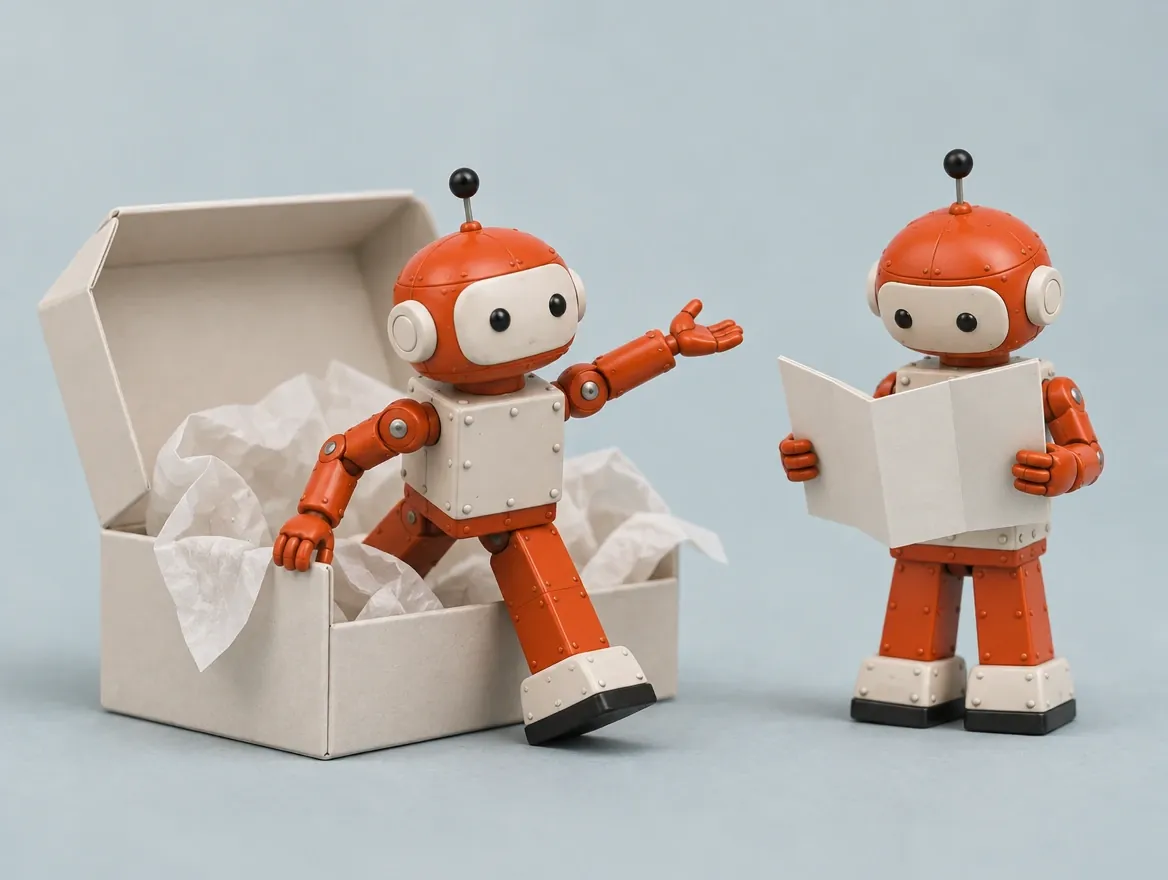
What are AI agents, in simple words?
An AI agent is a program that uses a language model, such as Claude or ChatGPT, to understand a request, decide what to do and act in a company's tools. Instead of only writing an answer, it reads the email, checks the calendar, prepares the reply and records the contact.
When people talk about agentic AI or agentic automation, they mean systems built with these agents. They are not people or magic: they are software that follows a goal within limits that someone set.
What is the difference between an AI agent, a chatbot and an automation?
An automation follows fixed rules, a chatbot talks within a script, and an agent chooses the next step to reach a goal. In practice, many projects combine all three.
| Criterion | Automation | Chatbot | AI agent |
|---|---|---|---|
| How it decides | Rules written in advance: if X happens, do Y | Answers within a script or a set of questions and answers | Chooses the next step to reach a goal |
| Example | A request comes in on the website and creates the contact in the CRM | Answers "what time do you open?" | Reads an email, understands the request, prepares the reply and alerts the team |
| Worth it when | The task is the same every time | There are many repeated questions | Cases vary and require reading text |
| Risk | Low | Low | Higher: needs limits and approval |
To connect tools with fixed rules, see what is n8n. For the big picture, see AI automation for SMBs.
What are examples of AI agents at a small business?
The most common examples are: reading and sorting emails, handling requests outside business hours, preparing invoice entries and following up on contacts. These illustrate what is possible, not client cases.
- Emails. The agent reads what arrives, works out what the person wants, writes the reply with the right facts, and leaves it as a draft or sends it, depending on the rule for that case.
- Requests outside business hours. It answers questions and saves the request for the team to handle in the morning.
- Invoices. It reads the invoice that arrives by email and prepares the entry in the invoicing software. A person confirms it.
- Follow-up. It follows up with people who asked for a quote and did not reply.
Rui Navarro, founder of Marrow4, uses AI agents in his own businesses, with Rui OS. What we sell is described in AI agents for businesses.
How does an AI agent work inside?
It needs five things: a clear goal, instructions and limits, tools, the company's facts and a person in the loop.
- Goal. "Answer the customers' frequently asked questions", not "help the company".
- Instructions and limits. What it can say and do, and what goes to a person.
- Tools. Only the access it needs: email, calendar, CRM.
- Facts. Services, opening hours and rules, so it does not make things up.
- A person in the loop. Approves what is sensitive and sees the record of what the agent did.
Are AI agents safe?
They are only as safe as the limits given to them. The main risks are making things up, promising what the company cannot deliver, and handling personal data carelessly.
These risks are reduced by supplying facts, writing down limits, getting approval for sensitive cases and recording everything. For personal data, GDPR applies: keep only what is necessary and be able to delete it.
Does a company need AI agents?
They are worth it where there is volume, repetition and clear rules. They are less worth it where each case is unique and a mistake is costly, such as negotiating a contract.
For a simple case, some people build an agent on their own with n8n. When the agent touches clients, sensitive data or several systems, it pays to work with someone who has already done it. The AI consulting for SMBs starts with a free 15-minute call. For the messaging channel, see the AI WhatsApp chatbot for businesses. The costs are in how much an AI agent costs, Rui's experience is in running a business with AI agents, and the acronyms are in the AI glossary.
About the author
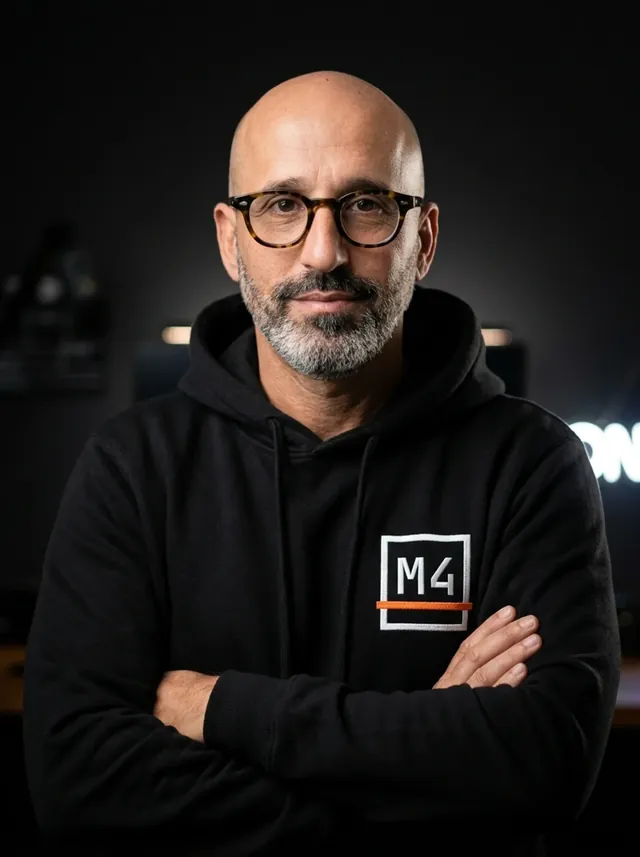
Rui Navarro is the founder of Marrow4. He has worked in digital marketing for more than 20 years, has more than 200,000 followers on social media and created Rui OS, the software he uses in his own businesses. Who is Rui Navarro