
Why do quotes get stuck?
Often it is not a refusal. It is a question nobody answered, a decision put off, or a contact that was never made. The patient may have found the price high, may have wanted to think about it, or may simply have forgotten, and the clinic never asked again.
This happens in dental clinics (implants, orthodontics), veterinary clinics (surgeries, dental scaling) and aesthetic medicine clinics (assessment consultations that were never booked). In each of them, an unanswered quote is a patient the clinic has already won and let slip away.
How do you follow up on a quote, step by step?
In five steps: list, sort, contact, record and stop.
- List the quotes sent that still have no answer, with the date, the treatment, the amount and who presented them. It can be a spreadsheet.
- Sort them by age: the most recent first.
- Contact with a short, personal message that asks whether any questions remain. A second contact a few weeks later, and no more (this timing is our own recommendation, not a rule).
- Record the answer: accepted, has questions, postponed or declined.
- Stop when the patient says they do not want to be contacted or does not reply to the second contact.
What message should you send?
A short message that asks instead of pushing, and that gives the patient an easy way out. An example:
"Good morning, [name]. This is [sender], from [clinic]. I wanted to know whether any questions remained about the proposal we presented to you. If you like, we can go over together what concerns you. If it no longer interests you, just tell me and we will not contact you again."
Notice what the message does not do: it does not say what the treatment is, it does not mention the price, it sets no deadline and it does not push. Whoever reads it knows who is writing and can reply in seconds.
What precautions should you take with GDPR and health data?
Health data is a special category under the GDPR, so the message must not include clinical information, and the patient must be able to say no easily.
- Write only what is necessary: the name and the question, without the treatment or the diagnosis.
- Contact them about the quote the patient asked for, not about other matters.
- Always give an easy way to say they do not want to be contacted, and respect it.
- Record when and how you contacted them, and keep only what is essential.
This is not legal advice: for your clinic's contact rules, check with your lawyer or your data protection officer.
What should never be done?
Pressure, invent deadlines or discounts, and keep insisting after a no. In practice:
- Saying the offer "ends this week" when that is not true.
- Sending the same message, word for word, to every patient.
- Contacting again someone who has already said no.
- Putting clinical data in a text message.
How do you automate follow-up without losing the human touch?
The list, the reminder and the first message can be automated, as long as the limits are written down and the patient can reach a person at any time. This is typical work for an AI agent connected to the clinic's calendar or CRM, and for AI automation of front-desk routines. The assistant never asks for health data.
To make sure the clinic is found before the quote, see how to appear in ChatGPT. And if the clinic has reviews on Google without a reply, see how to respond to negative reviews.
How do you know whether follow-up is working?
With three simple counts per month: how many quotes you followed up, how many got a reply and how many were accepted. Compare month to month. You do not need to promise a number at the start: what you measure is what happens in your clinic.
About the author
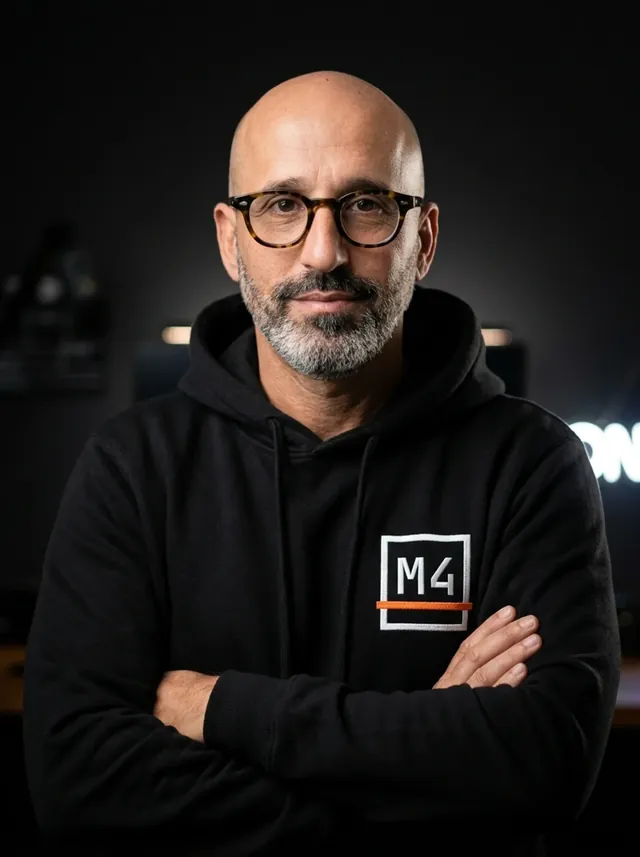
Rui Navarro is the founder of Marrow4. He has worked in digital marketing for over 20 years, has more than 200 thousand followers on social media, and created Rui OS, the software he uses in his own businesses. Who is Rui Navarro